歐洲航天局(ESA)公佈Hera探測器拍攝的雙小行星Didymos與Dimorphos近距離圖像,這是NASA的DART探測器2022年9月撞擊Dimorphos後首次有航天器到場近觀。較小的Dimorphos原本圓潤的一面被壓平,留下幾乎與天體一樣大的撞擊坑。DART當年使其公轉週期縮短約33分鐘,遠超預計的約10分鐘。
最大意外是周圍有數百塊數十釐米至約一米的石塊在移動,合成圖於11月6日在約29.9公里外拍攝;科學家未能確定石塊來自撞擊還是原本存在。Dimorphos也由一面始終朝向Didymos變爲翻滾運行。今年3月的研究另指,撞擊令兩者約770天的繞日週期改變不到一秒。
Hera已環繞約三週,餘下六個月將釋放兩顆立方星,分析礦物成分並首次以雷達探測小行星內部。研究人員說下一步要量化偏轉效率;目前並無已知小行星會撞向地球。
來源:CBC News 原報道。大魚新聞整理原創中文摘要;保留原刊發日期。
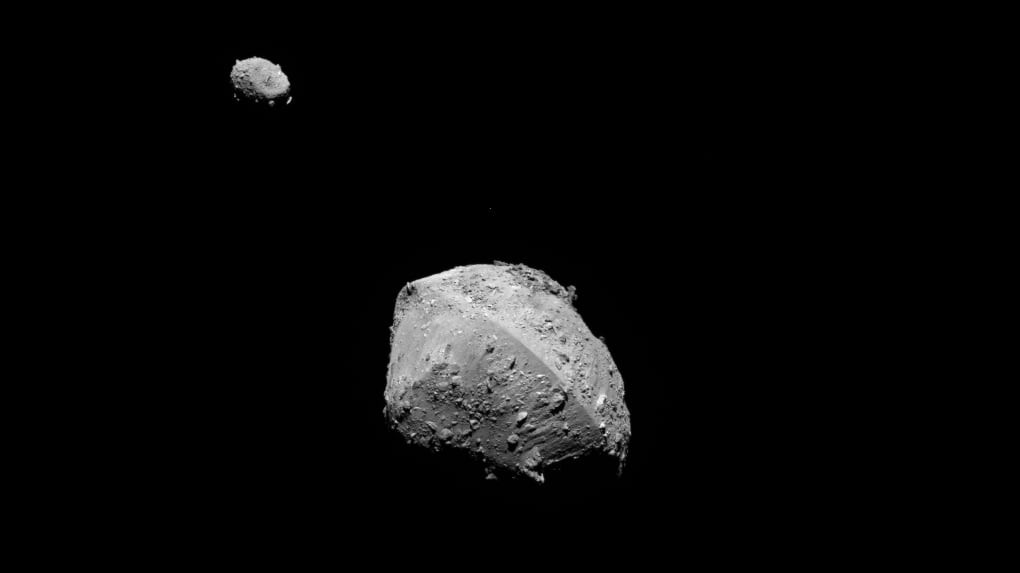
This Hera Asteroid Framing Camera image shows Dimorphos in orbit around Didymos, with the crater caused by the 2022 DART impact clearly visible. (European Space Agency)
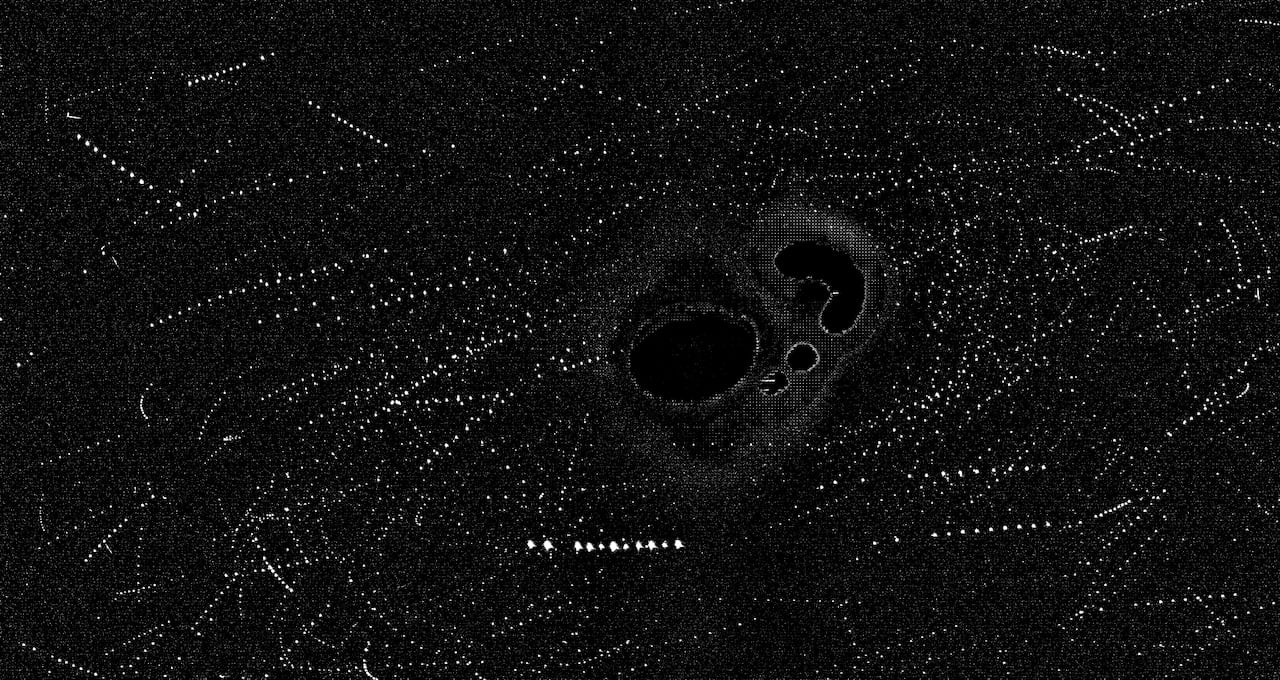
A composite of 11 long-exposure Hyperscout H images centred on Didymos; the dot trails correspond to hundreds of boulders moving around the Didymos-Dimorphos system. Acquired Nov. 6 from about 29.9 km. (European Space Agency)
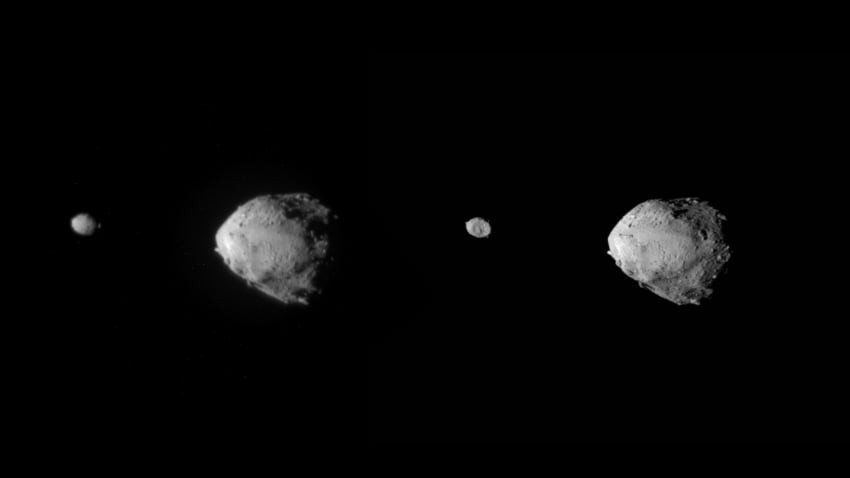
Comparing the Didymos system before (DART, left) and after (Hera, right) the 2022 impact. (NASA/Johns Hopkins APL/European Space Agency)