欧洲航天局(ESA)公布Hera探测器拍摄的双小行星Didymos与Dimorphos近距离图像,这是NASA的DART探测器2022年9月撞击Dimorphos后首次有航天器到场近观。较小的Dimorphos原本圆润的一面被压平,留下几乎与天体一样大的撞击坑。DART当年使其公转周期缩短约33分钟,远超预计的约10分钟。
最大意外是周围有数百块数十厘米至约一米的石块在移动,合成图于11月6日在约29.9公里外拍摄;科学家未能确定石块来自撞击还是原本存在。Dimorphos也由一面始终朝向Didymos变为翻滚运行。今年3月的研究另指,撞击令两者约770天的绕日周期改变不到一秒。
Hera已环绕约三周,余下六个月将释放两颗立方星,分析矿物成分并首次以雷达探测小行星内部。研究人员说下一步要量化偏转效率;目前并无已知小行星会撞向地球。
来源:CBC News 原报道。大鱼新闻整理原创中文摘要;保留原刊发日期。
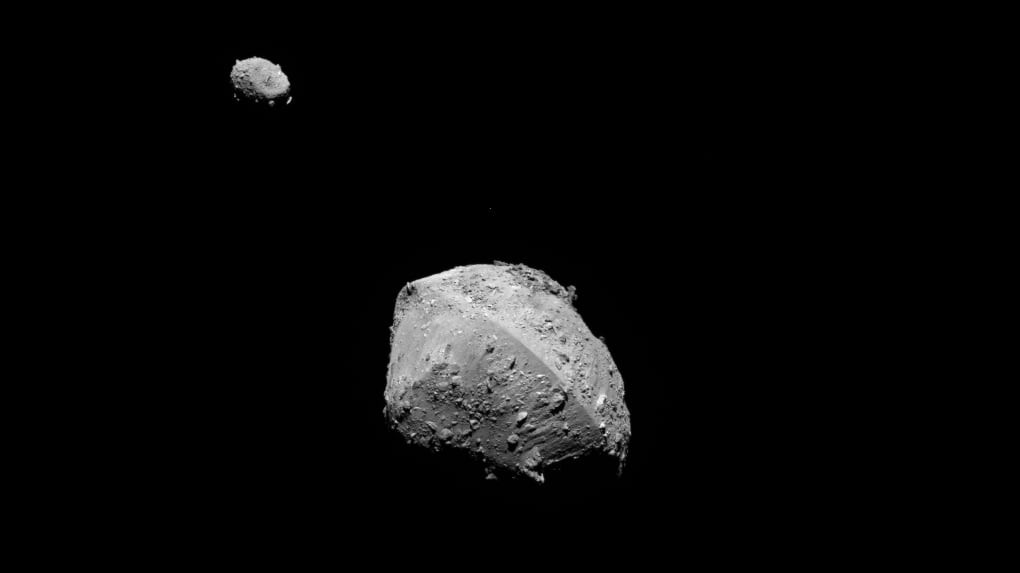
This Hera Asteroid Framing Camera image shows Dimorphos in orbit around Didymos, with the crater caused by the 2022 DART impact clearly visible. (European Space Agency)
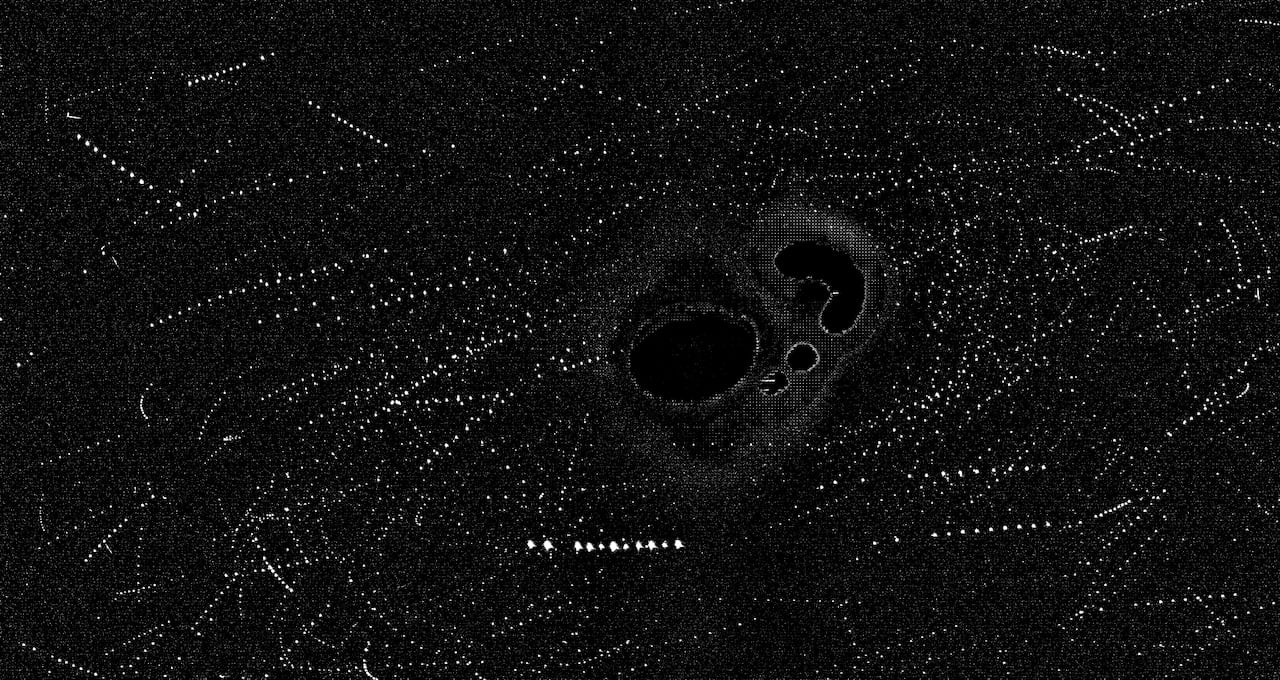
A composite of 11 long-exposure Hyperscout H images centred on Didymos; the dot trails correspond to hundreds of boulders moving around the Didymos-Dimorphos system. Acquired Nov. 6 from about 29.9 km. (European Space Agency)
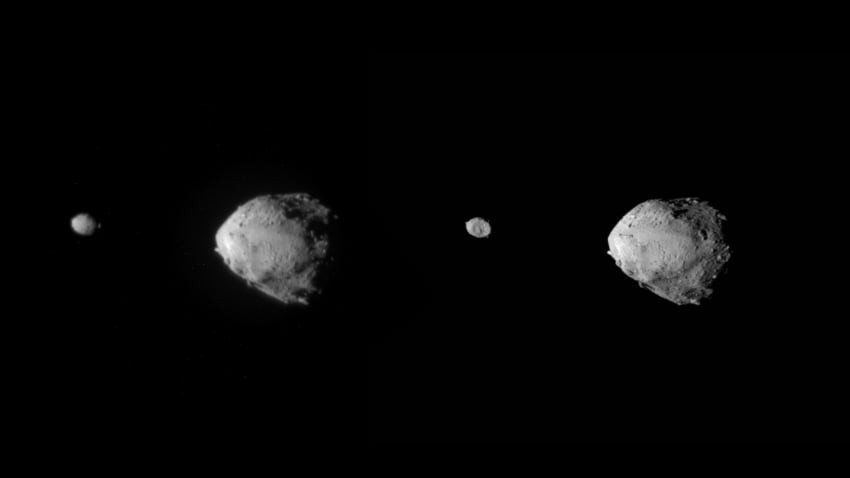
Comparing the Didymos system before (DART, left) and after (Hera, right) the 2022 impact. (NASA/Johns Hopkins APL/European Space Agency)